सप्ताह का श्लोक · भागवत गाथा · पुस्तक ०
Satyaṃ paraṃ dhīmahi — the phrase that opens and closes the Bhagavata
Verse of the week. Three words at the end of the Bhagavata’s first verse, and again near its close — on the highest truth, we meditate.
The Editors, Naimisha Press २ मिनट
अभी केवल अंग्रेज़ी में
सत्यं परं धीमहि
satyaṃ paraṃ dhīmahi
“On the highest truth, we meditate.” — Srimad Bhagavata 1.1.1
The Srimad Bhagavata’s first verse is long and dense. It speaks of the One from whom the world arises, by whom it is sustained and into whom it returns; who revealed the Veda in the heart of the first poet; before whom even the wise are bewildered. And then, after all that description, it stops describing. It ends with three words: satyaṃ paraṃ dhīmahi. On the highest truth, we meditate.
A verb, not a definition
The verse could have ended with a name. It ends instead with an act — dhīmahi, “we meditate”, the same verb the Gayatri uses. The tradition hears that echo on purpose. Whatever the Bhagavata is about to tell, it begins by placing the reader in a posture: attentive, collective (we), turned toward what is true rather than toward what is interesting.
And again at the end
Near its close, in the twelfth skandha (12.13.19), the Bhagavata returns to the same three words. Eighteen thousand verses later, after creation and dynasties and the whole life of Krshn, the text ends where it began: on the highest truth, we meditate. The story is a long way of arriving at a short sentence.
Where you meet it in the book
In Book Zero, the phrase is set in the Preamble, before the Mahatmya’s story begins — the first shloka in the Chronicle. It is on the first free pages, in all three languages.
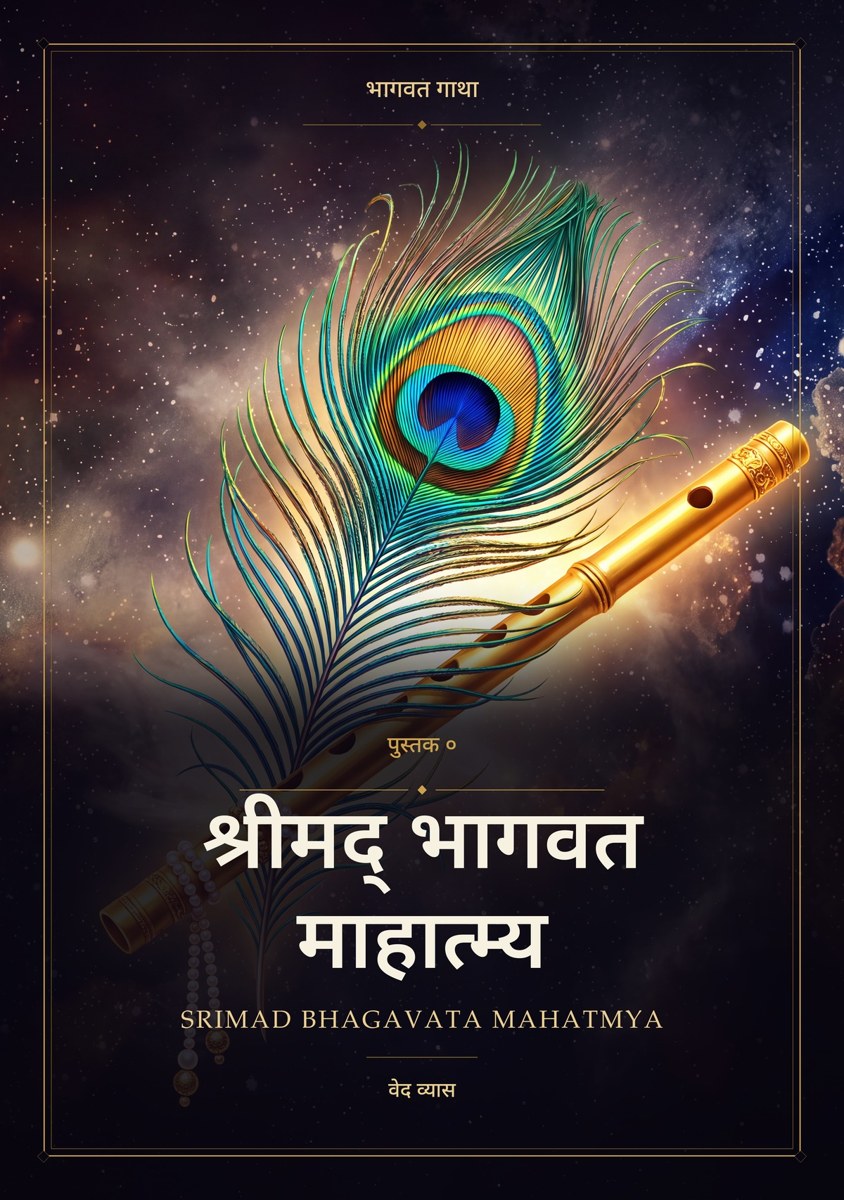
यह कहाँ से आरम्भ होता है
यह दृश्य पुस्तक ०, पूर्वपीठिका में पढ़ें — निःशुल्क।
चौदह पृष्ठ, तीन भाषाएँ।
और पढ़ें
 आज का धर्म
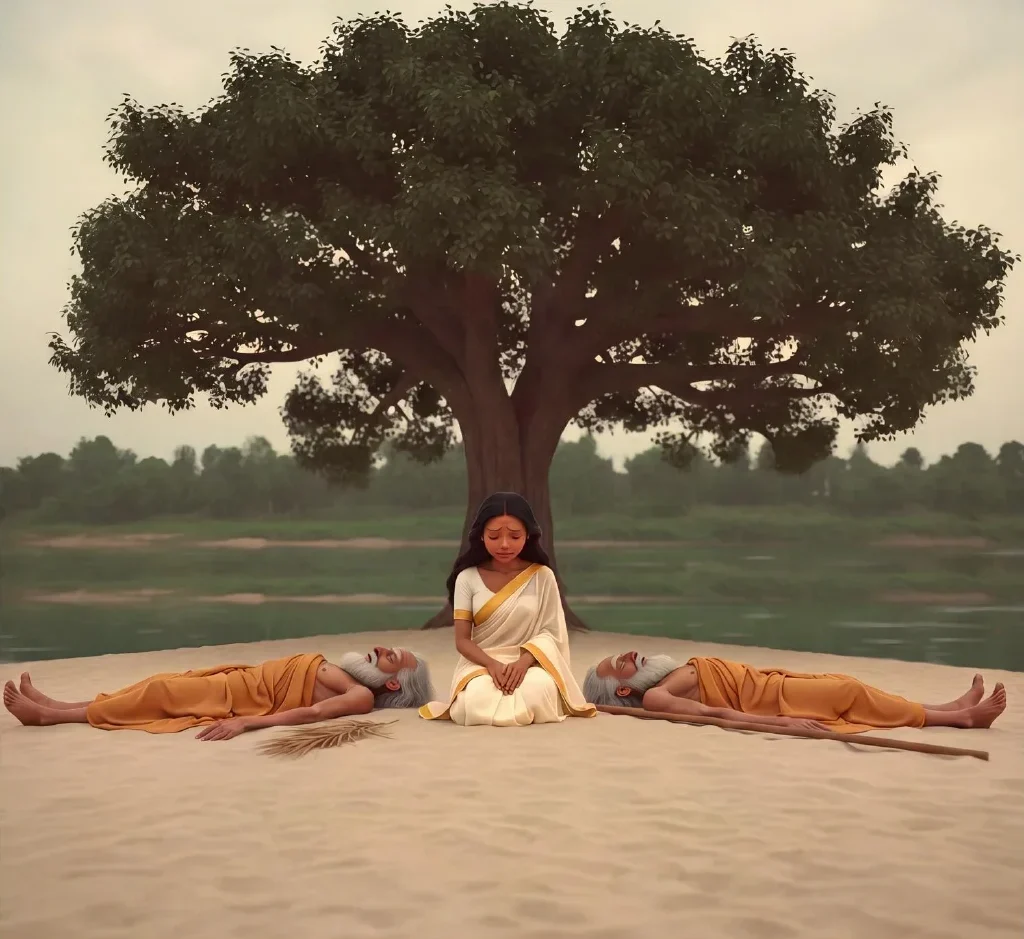
Why devotion tires: Bhakti’s sleeping sons and an age of distraction
In the Mahatmya, Bhakti is young and her sons — knowledge and detachment — are old and will not wake. A reading for anyone whose attention has worn thin. शिक्षाएँ
Why does the Bhagavata need a preface? The Mahatmya, explained
Six chapters from the Padma Purana are read before every saptaha. What they are, why the tradition keeps them, and why our Chronicle begins with them. शिक्षाएँ