शिकवण · भागवत गाथा · पुस्तक ०
Why does the Bhagavata need a preface? The Mahatmya, explained
Six chapters from the Padma Purana are read before every saptaha. What they are, why the tradition keeps them, and why our Chronicle begins with them.
The Editors, Naimisha Press २ मिनिटे
सध्या फक्त इंग्रजीत

Most books do not come with a second book explaining why you should read the first. The Srimad Bhagavata does. Before a seven-day recitation begins, the reciter traditionally reads the Bhagavata Mahatmya — six short chapters from the Uttara Khanda of the Padma Purana. A mahatmya is a “greatness”: an account of what a text, a place or a vow is for.
What is in it
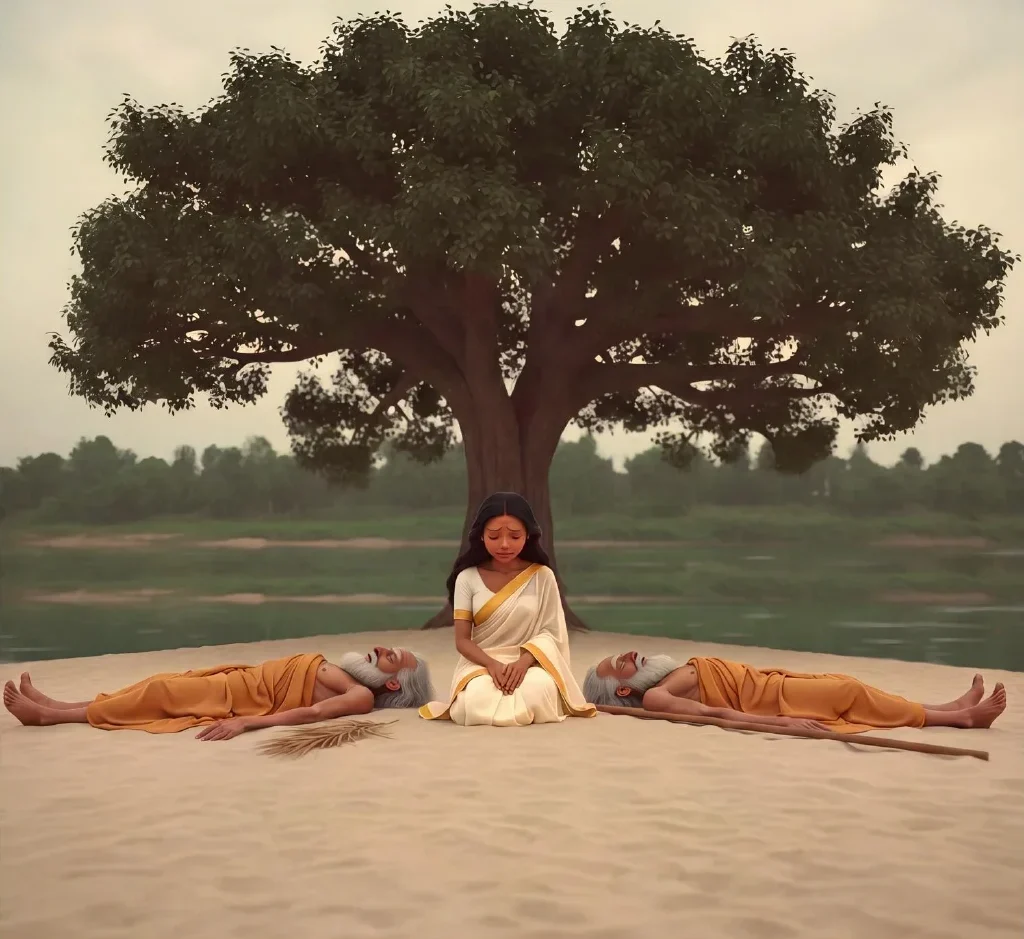
The Mahatmya is a story, not a sermon. In its first three chapters Narada, wandering an earth that has entered the age of Kali, meets Bhakti on the bank of the Yamuna. Her sons, knowledge and detachment, have grown old and will not wake. Recitation of the Vedas and the Gita stirs them for a moment and no more. The cure, when the four Kumaras give it, is the Bhagavata itself — heard over seven days on the bank of the Ganga.
The next two chapters prove the claim on the hardest case the text can find: Dhundhukari, a son who wasted everything and died badly, wandering as a ghost. No rite has helped him. His brother Gokarna reads the Bhagavata for seven days, and Dhundhukari listens from inside a length of bamboo — one knot splitting each day.
The sixth chapter is practical. It gives the rule of the hearing: when to begin, how long to sit, how to honour the book, and how to close on the seventh day.
Why a preface
The Mahatmya answers the question a modern reader asks first, and that the Bhagavata itself only answers slowly: why this, why now, why like this? It frames the twelve skandhas not as an anthology to dip into, but as a single hearing that changes the one who hears.
That is why the Chronicle begins here. Book Zero is the Mahatmya, told whole; Books One to Seven are the seven days it prescribes. A family can read the Chronicle the way the Mahatmya asks for the Bhagavata to be heard — in order, over a week, together.
Next in this series: the four ages, and why this one is called Kali.
आणखी वाचा
 आजचा धर्म
Why devotion tires: Bhakti’s sleeping sons and an age of distraction
In the Mahatmya, Bhakti is young and her sons — knowledge and detachment — are old and will not wake. A reading for anyone whose attention has worn thin. आठवड्याचा श्लोक
Satyaṃ paraṃ dhīmahi — the phrase that opens and closes the Bhagavata
Verse of the week. Three words at the end of the Bhagavata’s first verse, and again near its close — on the highest truth, we meditate. शिकवण